
In the Headlines – Echoing The Apex Code!
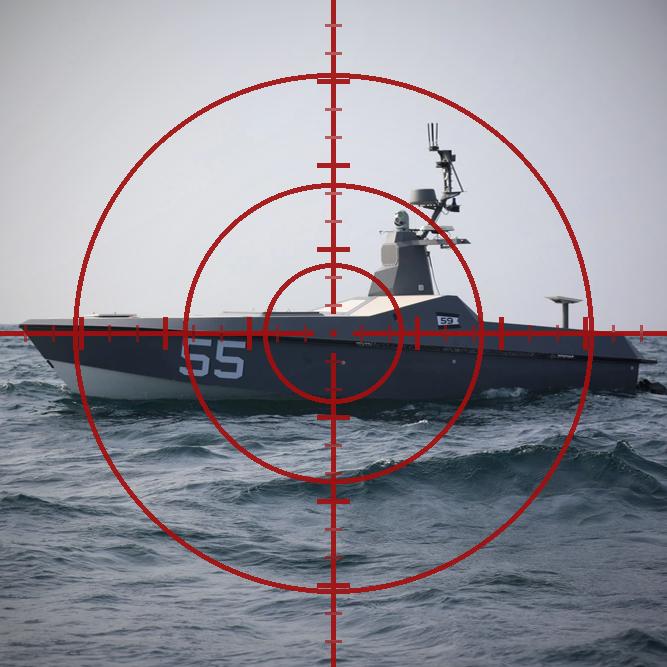
On July 12, 2026, U.S. Central Command confirmed that American forces used armed unmanned surface vessels (USVs) in combat for the first time — three Saronic Corsair drone boats struck a submarine and ship maintenance facility at Iran’s Bandar Abbas Naval Base, near the Strait of Hormuz. It’s the moment naval autonomy watchers have expected for years: robotic boats moving from experimentation to the strike role.
When I wrote The Apex Code, the MaRACaS gunboat program — eight AI-guided vessels operating as a coordinated swarm, armed and capable of designating and engaging targets with minimal human oversight — was speculative fiction grounded in where the technology was heading. Two years later, the gap between page and headline has closed considerably.
Three real-world roles, one platform
The Corsair, built by Texas-based Saronic, is a 24-foot autonomous surface vessel that can carry up to 1,000 pounds of payload over more than 1,000 nautical miles, operating either fully autonomously or under remote supervision. In the space of a single month, the same platform has been used for three distinct missions:
- Strike: Three Corsairs conducted a one-way attack run against Iranian naval infrastructure on July 12 — the combat debut for U.S. sea drones.
- Search and rescue: In June, a Corsair operated by the Navy’s Task Force 59 pulled two downed Army Apache pilots from the water off Oman and transferred them to a helicopter for evacuation.
- Persistent patrol: A separate class of autonomous boats, the GARC, has logged hundreds of hours patrolling the Strait of Hormuz for surveillance and choke-point security — the unglamorous, ISR-heavy work that makes up most real-world USV taskings.
That spread — strike, rescue, persistent surveillance — is a useful reminder that most operational autonomy isn’t a swarm of armed boats making independent kill decisions. It’s sensors, endurance, and risk reduction for the humans who’d otherwise be doing that job in a helicopter or a manned patrol craft.
Where the fiction pushes further
MaRACaS was built around a harder question: what happens when the human-in-the-loop is removed entirely, and a swarm is left to interpret ambiguous data and act on its own authority? That’s still the frontier separating today’s remotely-supervised Corsairs from the fully autonomous, weapons-release-capable boats in The Apex Code — and it’s the tension the whole book is built on.
— Chris